



Nine steps separate a member’s idea from the president’s signature. Eight of them exist to kill it.
That is the design, not a malfunction. The men who wrote Article I wanted a system where a determined minority could stop almost anything, and they built one. A bill does not fail because Congress is broken. It fails because the process is doing what it was told to do.
This is how a bill becomes a law in the 120th Congress, which convenes on January 3, 2027, with Democrats holding both chambers and a Republican president waiting at the other end. The steps do not change. Who gets to use them does.
Table of Contents
The short version
- A member introduces the bill. It gets a number: H.R. 1234 in the House, S. 567 in the Senate.
- Leadership refers it to a committee, usually by subject.
- The committee holds hearings, marks up the text, and votes to report it.
- The House Rules Committee or Senate leadership decides whether it gets floor time.
- The chamber debates, amends and votes.
- The other chamber repeats the process on the same text.
- Differences are settled by a conference committee or by sending the bill back and forth.
- The president signs it, vetoes it, or lets it become law without a signature.
1. A member introduces the bill
In the House, a member drops the bill into the hopper in the Clerk’s office. In the Senate, a member waits to be recognized on the floor and hands it to a clerk. Nobody reads it aloud. Nobody votes on whether it deserves to exist.
The number it gets is a receipt, not a promise. Every bill is published on congress.gov within a day or so, which makes it easy to forget how much of the text was written elsewhere. Staff write most of it. Agencies sometimes hand over language. Interest groups draft sections and shop them to friendly offices. That is routine and legal. The member’s name on the cover is the part that carries political weight.
Most bills are not meant to pass. Members file them to stake out a position, to keep a campaign promise, or to name a post office. The first real decision in how a bill becomes a law is not the vote. It is where the bill lands.
2. Committee is where bills go to die
Leadership refers the bill to a committee by subject: taxes to Ways and Means, education to HELP, armed services to Armed Services. The referral is the first fork in how a bill becomes a law, and it is decided by leadership, not by merit. The chair then decides whether to schedule a hearing, whether to draft a markup, and whether to bring the text up for a vote.
This is the whole game. A chair does not have to argue with you or vote you down. He just has to not put you on the calendar. The bill sits for two years and expires with the Congress, and there is no recorded vote to explain to anyone. The minority can request a hearing. In the House, it cannot force one.
| Stage | What happens | Who controls it |
|---|---|---|
| Hearing | Witnesses testify, members ask questions, and a record is built. No vote. | Committee chair |
| Markup | Members offer amendments line by line. The text that leaves this room is the text that might become law. | Chair, then the committee majority |
| Report | The committee votes to send the bill to the full chamber, with a written report and minority views attached. | Committee majority |
| Nothing | The bill stays on the calendar and expires two years later. | Chair, by inaction |
Most of how a bill becomes a law happens in this room, months before anyone outside Washington notices. When a bill finally reaches the floor, the argument is usually already over.
3. Getting to the floor is a second fight
The House does not simply bring bills up. Most major legislation needs a special rule from the Rules Committee, which sets debate time, decides which amendments are in order, and can block the minority from offering a substitute. A closed rule allows no amendments at all. An open rule allows many. The choice is political, and the committee belongs to the majority.
The Senate has no Rules Committee, and it does not need one. Leadership either gets unanimous consent, which a single senator can refuse, or files for cloture: 60 votes, then up to 30 more hours of debate before the final vote. That is why most Senate legislation effectively needs 60 votes even though the Constitution asks for a majority.
There are two escape hatches. A discharge petition in the House can force a floor vote with 218 signatures, but it requires members of the majority to defy their own leadership, which is why it almost never works. Reconciliation in the Senate lets spending and revenue bills pass with 51 votes, once per fiscal year, as long as every provision survives the Byrd rule. It is powerful and narrow, and every word of it gets fought over.
The second half of how a bill becomes a law is decided by the calendar. Whoever controls the calendar controls the outcome.
4. The vote
A quorum is required, debate time is fixed by rule or agreement, and amendments are voted in order. Most bills pass with a simple majority of those voting. Many pass by voice vote, which records no names and takes about four seconds.
The recorded votes are the ones that matter, and the thresholds are not all the same:
| Action | House | Senate |
|---|---|---|
| Pass a bill | Simple majority | Simple majority |
| End a filibuster (cloture) | Not applicable | 60 votes |
| Override a veto | Two-thirds | Two-thirds |
| Discharge a bill from committee | 218 signatures | Not applicable |
| Reconciliation bill | Simple majority | 51 votes |
| Convict in an impeachment trial | Not applicable | Two-thirds |
The vote is the part of how a bill becomes a law that gets the cameras, and it is usually the least surprising part. By the time the clerk calls the roll, the whips have counted twice. No single vote decides how a bill becomes a law. The decisive ones are usually procedural.
5. The other chamber
The second chamber can pass the bill as written, amend it, or ignore it. If it amends the text, the bill goes back to the first chamber, which can accept the changes or insist on its own version. If the two chambers cannot agree, they can convene a conference committee of senior members from both parties. The conference report cannot be amended on the floor. Each chamber gets an up-or-down vote, and one “no” sends the whole thing back.
Nothing in how a bill becomes a law requires the two chambers to like each other. The House and Senate passed different versions of the same health care bill in 2009 and spent two months negotiating in a room most members never entered. The text that finally reached the president was nothing like the text that was introduced, which is why committee reports and amendment records matter more than press releases.
6. The president
Under Article I, Section 7, the president has ten days, Sundays excluded, to sign or veto. If Congress is in session and the president does nothing, the bill becomes law. If Congress has adjourned, doing nothing kills it. That is the pocket veto, and it is the reason the December calendar matters more than the December speeches.
A regular veto returns the bill with objections. Overriding it takes two-thirds of each chamber, a bar high enough that a veto usually ends the argument. The president’s signature is the last box in how a bill becomes a law, and the easiest one to refuse.
7. What it looks like in practice
The Affordable Care Act is the clearest recent example, partly because it nearly died three times. H.R. 3590 was introduced in the House in 2009. The House passed its version on November 7, 220 to 215. The Senate passed its own version on December 24, 60 to 39, with exactly the votes needed to break a filibuster. The two chambers spent January and February arguing over the differences, and President Obama signed the bill on March 23, 2010.
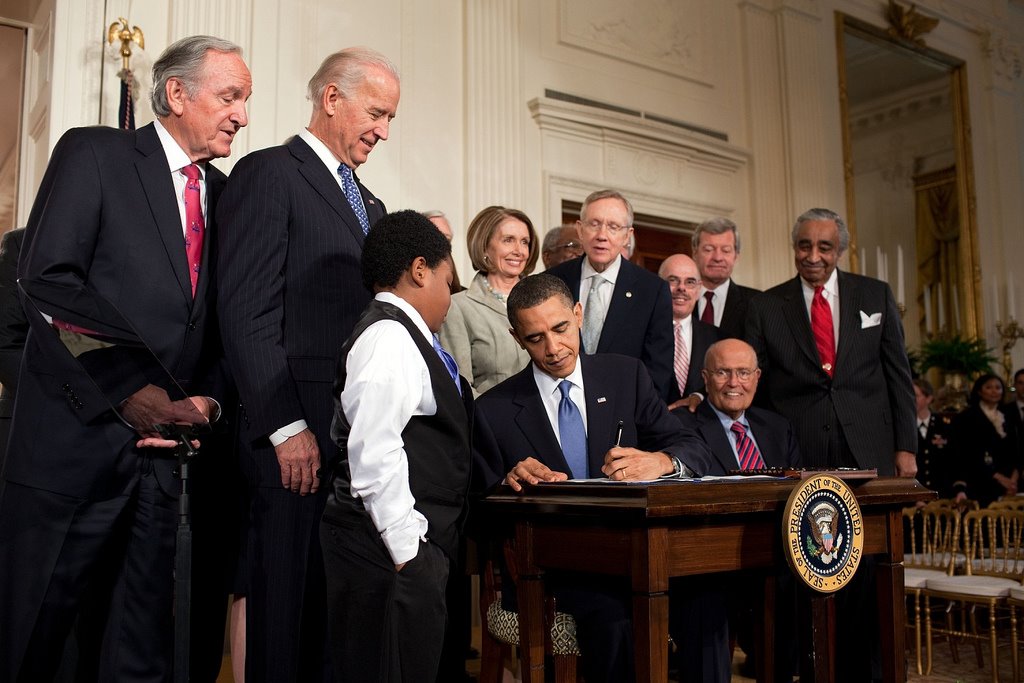
Fourteen months. One Christmas Eve session. A final Senate vote that could lose one senator and still pass. That is what the full path looks like when it works, and it is the clearest recent example of how a bill becomes a law moving through every stage without a shortcut.
The 2017 tax bill moved faster: introduced in the House in early November, passed both chambers in about seven weeks, signed on December 22. Same steps, different clock. Reconciliation made the Senate side easier, which is why it needed 51 votes instead of 60.
8. What changes in January 2027
The 120th Congress convenes on January 3, 2027. Democrats will hold 56 Senate seats and a majority in the House. Committee chairs change hands. The committees that spent two years investigating the executive branch change with them. Bills that died in a Republican committee in 2026 will get hearings in a Democratic one in 2027. Divided government changes the politics of how a bill becomes a law, not the steps.
The arithmetic does not change. A Democratic House and Senate can pass bills. A Republican president can veto them. An override needs two-thirds of both chambers, and neither party will have it. So the veto becomes the real gate, and most legislation is written either to survive one or to be campaign material when it does not.
Divided government does not stop lawmaking. It narrows the definition of what counts as must-pass: appropriations, the defence authorisation, and whatever deadline Congress cannot avoid. Everything else waits for a veto fight it will probably lose.
9. Where bills actually die
GovTrack’s historical statistics put the share of introduced bills that become law in the low single digits. Thousands are introduced, hundreds are reported out of committee, dozens are signed. The exact numbers move from Congress to Congress. The shape does not.
Most bills die in the committee room rather than on the floor, and the usual cause is a chair who never put them on the calendar. None of that changes how a bill becomes a law. The steps are fixed. Politics decides which ones get used, and how often.
What a law actually looks like
When a bill is signed, it gets a public law number. The text is printed in the Statutes at Large, then broken into sections and inserted into the U.S. Code, which is the version courts and agencies cite. A bill about bridge inspections becomes a numbered section in Title 23, and the press release becomes a footnote in a committee report.
Most of what Congress enacts is not a standalone bill. It arrives as an omnibus spending package, a defence authorisation, or a bill carrying riders: provisions that could not pass alone but travel with something that must. That is how a two-page appropriations measure becomes a thousand-page document members vote on hours after it is released.
Riders are where the process gets least transparent. They are debated less, amended less, and often written by staff in a room with no cameras. If you want to know what a bill does, read the enrolled text. The summary is somebody else’s version of it.
FAQ
How long does it take for a bill to become law?
Weeks for a narrow bill with leadership backing. Fourteen months for the Affordable Care Act. The record is somewhere in between, and the calendar is usually the reason. The gap between those numbers is the honest answer to how a bill becomes a law: the steps take days, the politics takes months.
Can the president make a law without Congress?
No. Executive orders tell agencies how to carry out laws that already exist. The next president can reverse them, courts can block them, and Congress can undo them. Only a statute passed by both chambers and signed, or enacted over a veto, changes the law itself.
Why do tax bills start in the House?
The Constitution says bills for raising revenue must originate in the House. The Senate can amend them, which is why the Senate Finance Committee still matters, but the first move belongs to Ways and Means.
Is a continuing resolution a law?
Yes. It is a joint resolution that funds agencies at existing levels for a set period, and it goes through the same steps as anything else: both chambers, then the president’s signature. A shutdown happens when that last step fails.
What is a rider?
An unrelated provision attached to a bill that is expected to pass. It is how something that could not survive a standalone vote gets moved. Riders are common in appropriations bills, and they are one reason a must-pass spending package can change policy far beyond spending.
What to watch next
Today Roast covers Congress with the bill text and vote counts linked, and tracks what the White House does with what it gets. When a step above changes, it shows up in the politics feed first. More on how we report is in our editorial standards.
Leave a Reply